
Blog Post 1: On Death
In my new novel, A Final Testament, two unfortunate men meet untimely ends. One maybe deservedly so, the other probably not. The reason you might choose to read my novel is because people die and someone else tries to determine why they died and who killed them–ostensibly to bring the killer(s) to justice. Murder mysteries and thrillers, according to most publishing guides, rank second only to romance novels in terms of what readers are buying. And those genres have tended to dominate sales since publishers have kept track of such things. Why is that?
Death is the great mystery of life. It’s kind of a weird thing. We’re “here” and then we’re not. Like birth, it’s something every human being will experience, personally, and an event most of us will experience vicariously when we witness a loved one, a family member, or a friend, die. Even the loss of a beloved pet can trigger a profound sense of grief. One of my earlier memories involving death sprouted from seeing a puppy wander onto a highway near our home and get hit by a car. With little effort I can conjure up that memory as clearly as I can recall the lunch I had a mere hour ago.
I guess death is something we fear, anticipate, and sometimes even welcome. So much fiction, especially in the mystery and thriller categories, involves death. The entertainment industry would wither away and die without death. I suppose our own coming to grips with our mortality drives some of this interest. The larger question most of us would like an answer to is what, if anything, happens after we die? Religion provides one answer to this question while the Conqueror Worm offers another.
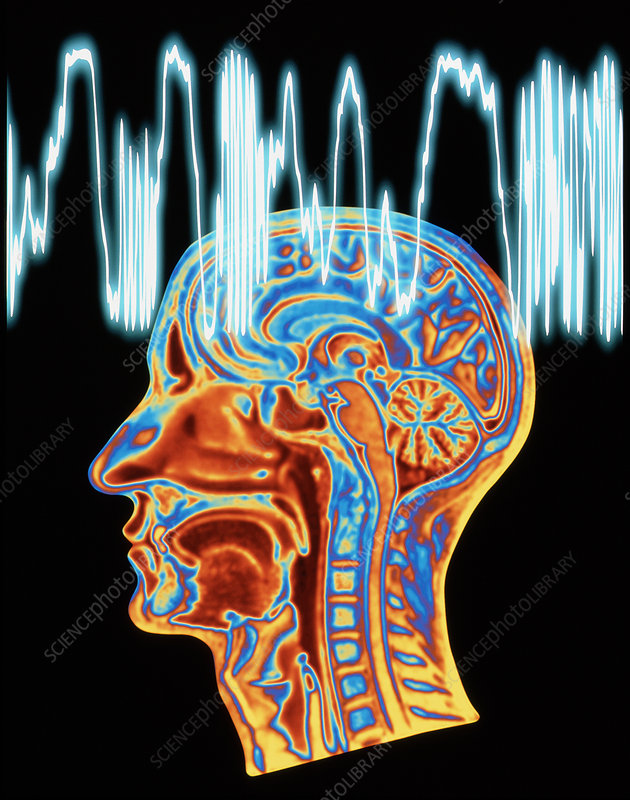
In A Final Testament, Ja’Mal Carter, an African American grad student at Columbia University in New York City, discusses an intriguing study in which a Canadian man died during a brain EEG (electroencephalogram), which recorded interesting phenomena immediately before, and shortly after, his death. The patient was an 87-year-old man who had been admitted to the hospital after a fall. Because he began experiencing seizures, doctors connected him to a continuous EEG to monitor his brain activity. Sadly, while the scan was running, he unexpectedly suffered a fatal heart attack. The EEG continued to record his brain activity until his death was discovered. The physicians running the scan subsequently published a journal article reporting their findings. This was a remarkable event as it represents the first time a human brain’s transition into death was recorded in such minute detail. The article can be found here: “Enhanced Interplay of Neuronal Coherence and Coupling in the Dying Human Brain”
The key findings from the article include what the EEG recorded during the 30 seconds before and after his heart stopped beating.
Specifically:
• “Life Flashing Before Your Eyes”: The EEG showed a surge in gamma oscillations. These are the same brain waves associated with high-level cognitive tasks like dreaming, meditation, and—most notably—memory retrieval.
• Coordinated Activity: Rather than the brain simply “shutting down,” the electrical activity appeared highly organized, suggesting the brain might be programmed to play a “last recall” of life events.
• Post-Mortem Activity: The recording continued after clinical death (when the heart stopped), showing that the brain remained active for a period of time even without blood flow.
Pretty amazing stuff! The incident arguably lends credence to the idea that we see a re-play of our life before we die. Some years ago, following an incident in which I went into septic shock, I “died” briefly. I remember my vision narrowing to a single point of light and I could hear the doctors running the code trying to revive me, and then nothing. Just darkness. It was as if a candle had been blown out. The next thing I could recall was waking up in a hospital bed. Very disorienting to me.
On an even less cheerful note, here’s a short video discussing the dying process: https://www.msn.com/en-us/money/news/here-s-exactly-what-happens-when-you-die/vi-AA1Ty3wF?ocid=socialshare
I definitely think it’s more fun to read about death than to experience it oneself. But, as some have suggested, our mortality is part of what makes us human–and something we all share.